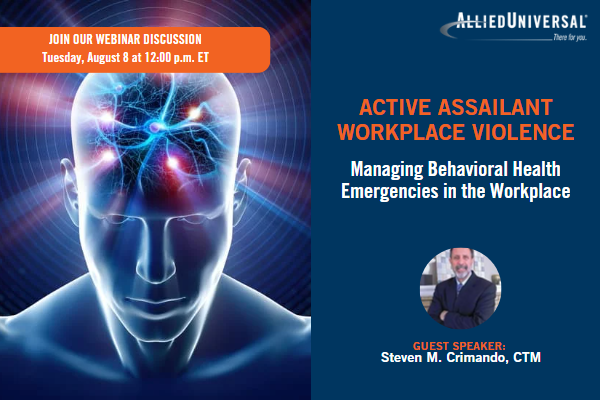
In recent years, the prevalence of mental illness has increased, with one in four adults in the U.S. currently affected. Stress levels are at an all-time high, and workplace suicides are on the rise. The human costs are significant, and untreated mental illnesses and substance abuse disorders lead to over $100 billion in lost productivity annually, playing a role in workplace violence.
To effectively recognize and respond to behavioral health emergencies in the workplace, it is crucial to approach the matter not just from human resources, security, or legal perspectives, but also from a psychological standpoint. By understanding how to be more than bystanders and becoming upstanders, individuals present during a behavioral health crisis can make a significant impact by learning to recognize and respond to such emergencies in the workplace.
To effectively recognize and respond to behavioral health emergencies in the workplace, it is crucial to approach the matter not just from human resources, security, or legal perspectives, but also from a psychological standpoint. By understanding how to be more than bystanders and becoming upstanders, individuals present during a behavioral health crisis can make a significant impact by learning to recognize and respond to such emergencies in the workplace.
Seating is Limited...
Register Today!
Register Today!
Having trouble completing this form?
If you are using Internet Explorer, please ensure that you are using version 10 or higher by clicking here.
Alternatively, you may use Google Chrome or Firefox.
If you are using Internet Explorer, please ensure that you are using version 10 or higher by clicking here.
Alternatively, you may use Google Chrome or Firefox.
Allied Universal
US Headquarters: 450 Exchange | Irvine, CA 92602
Website | Contact Us | Privacy Policy | Terms of Use
Canadian Headquarters: 703 Evans Avenue, Suite 103 | Toronto, Ontario M9C 5E9
Website | Contact Us | Privacy Policy | Terms of Use | Cookie Policy